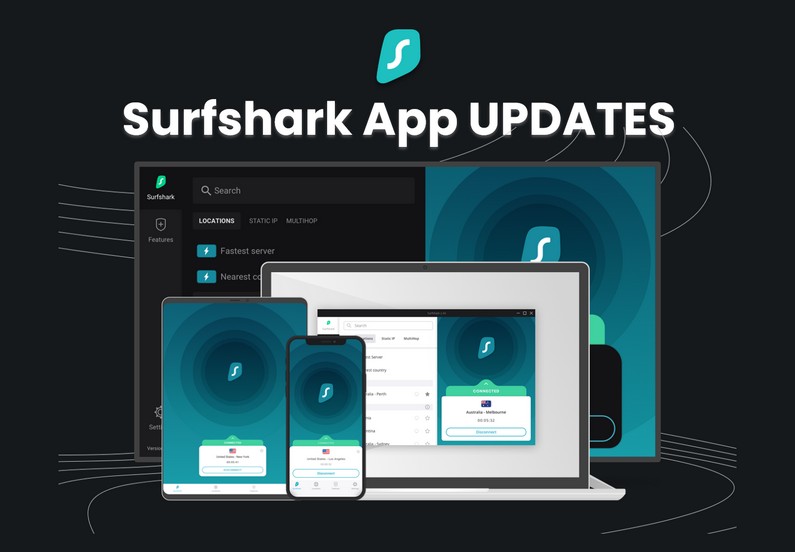
Surfshark VPN : Award-winning VPN service

jasonX

Bardzo aktywny
Dołączył
23 Październik 2015
Posty
194
Reakcje/Polubienia
1155

Surfshark's 8th Birthday "Best-Ever Deal"

Y8en7bD.gif


s2Jiq7o.gif


Surfshark is in a festive mood as they are turning 8-years old!
In celebration of this glorious event, they are launching their biggest deal from April 20 to May 11, 2026!

Get it
Zaloguj lub Zarejestruj się aby zobaczyć!


Data and info derived / lifted from Surfshark with permission
 
Ostatnia edycja:

jasonX

Bardzo aktywny
Dołączył
23 Październik 2015
Posty
194
Reakcje/Polubienia
1155

ZTNA vs. VPN: which one is right for you?


Rg39R7N.jpeg


Although ZTNA and VPNs can both be used to regulate secure access, they work in different ways. A VPN encrypts internet traffic and routes it through another server, making it a go-to option for personal online privacy. ZTNA, on the other hand, is mainly designed for workplaces, granting access to internal apps and services only after a series of strict identity checks. While VPNs secure connections broadly, ZTNA provides a more targeted, identity-based access model.
Mr. Alek Furgal of Surfshark shares some insights and info for us. Read on below


What is ZTNA (Zero Trust Network Access)?
ZTNA, short for Zero Trust Network Access, is a security approach that controls how users connect to private company applications and services. Instead of assuming someone should be trusted once they’re inside a network, ZTNA follows a stricter rule: no user or device is trusted by default, even if they’re logging in from the right place.

The main idea behind ZTNA is simple: people should only be able to access what they actually need — and only after they’ve been properly verified.

How ZTNA works
Rather than opening the door to an entire internal network, ZTNA grants access on an application-by-application basis. Here’s what typically happens:


bH46BEr.jpeg


1. You request access to a specific tool or app (like an internal dashboard or HR system).
2. The ZTNA gateway verifies your identity and device.
3. You get access to the requested app.
4. All other apps remain restricted.

This makes ZTNA especially useful for modern workplaces where employees, contractors, and teams may be working from different locations, devices, or cloud environments.

Why businesses use ZTNA
ZTNA is often seen as a more modern alternative to traditional network-based access because it:

  • Limits unnecessary exposure to internal systems;
  • Reduces the risk of attackers moving through a network if an account is compromised;
  • Works well with cloud-based apps and hybrid work setups;
  • Gives organizations more visibility and control over who can access what.

Instead of connecting users to a full private network, ZTNA connects them only to the specific applications they’re approved to use — nothing more.


What is a VPN (Virtual Private Network)?
A VPN is a tool that creates a secure, encrypted connection between your device and another server or network. It’s most commonly used to protect your internet traffic, especially when you’re on public Wi-Fi, and to add an extra layer of privacy while browsing online. VPNs have evolved over decades and are widely used by businesses and everyday users alike.

How a VPN works
When you connect to a VPN, your internet traffic is routed through a secure tunnel before it reaches its destination. That process usually looks like this:


haG8q1J.jpeg


1. You connect to a VPN server.
2. Your traffic travels through a secure tunnel.
3. The VPN server forwards your traffic.
4. Websites see the server’s IP (Internet Protocol) address instead of yours.

In a workplace setting, VPNs can enable employees to access internal company systems remotely, as if they were physically connected to the office network. However, because that connection can provide relatively broad access to internal systems, many organizations have also adopted approaches such as ZTNA.

Why people use VPNs
VPNs are popular because they can:

  • Encrypt internet activity and protect data on unsecured networks;
  • Help prevent malicious tracking by masking your IP address;
  • Allow remote access to private networks (like company resources);
  • Improve privacy while browsing, streaming, or traveling.

Disclaimer: Please note that using Surfshark services for any illegal activities is strictly forbidden and violates our Terms of Service. Make sure that any use of Surfshark services for your particular activities conforms to all relevant laws and regulations, including those of any service providers and websites you access using Surfshark.


Key differences between ZTNA and VPN
ZTNA and VPNs may seem similar, since both help users securely connect from outside a network. But the way they handle access — and the level of control they provide — is very different.

A VPN focuses on protecting the connection itself by routing and encrypting traffic. ZTNA takes a more targeted approach, verifying users continuously and granting them access only to specific applications.

Rather than thinking of one as universally better, it’s more helpful to understand how they differ — and which situations each one is best suited for. See key differences at a glance below.


PdDerTV.jpeg


  • Security approach

    VPNs and ZTNA both improve security, but they do so in different ways.

    A VPN protects data in transit by encrypting traffic between a user and a server. Once connected, the user can communicate privately through an established tunnel.

    ZTNA adds an additional layer by continuously verifying identity and context, applying a stricter access model suitable for enterprise environments.

  • Access scope and control

    Another key difference lies in what users gain access to once they have connected.

    VPNs are often used to route traffic through a secure VPN server or securely connect to a private network. Depending on the setup, this can allow access to a broader range of internal resources.

    ZTNA is more specific by design, granting access only to particular applications or services rather than the wider network.

  • Network visibility

    With VPNs, users may be able to see more of the internal environment once connected, which can be useful in traditional corporate setups where employees need access to multiple systems.

    ZTNA limits visibility by keeping applications hidden unless access is explicitly approved, thereby reducing unnecessary exposure in larger organizations.

  • Ease of use

    VPNs are widely used because they’re straightforward: users typically log in, establish a secure tunnel, and once connected, subsequent outgoing traffic is protected.

    ZTNA is typically part of a broader workplace access system, often working alongside identity providers and company security policies. As a result, initial setup and management are more complex; however, for end users (i.e., company employees), the connection process is usually smooth.

  • Performance and scalability

    Both technologies are designed to support secure access, but they’re often used in different environments and at different scales.

    VPNs are a reliable and widely adopted option that lets individuals and businesses secure their connections without requiring major changes to existing infrastructure.

    ZTNA platforms are typically built for larger organizations managing access across many applications, users, and cloud services. By focusing on app-specific connections rather than full network tunnels, ZTNA can offer more flexibility as environments grow more complex.

    In practice, VPNs remain a strong solution for many common use cases, while ZTNA is often chosen when granular access control and large-scale application management become a priority.

  • Cloud readiness and modern workplace fit

    VPNs remain a widely used solution for secure connectivity, especially in remote work and privacy-focused browsing.

    ZTNA was developed more recently to match the needs of cloud-first workplaces, where access is often centered around specific applications rather than a single internal network.


    ZTNA vs. VPN: which one better fits your needs?
    ZTNA and VPNs are both valuable tools for secure access — the better choice depends on what you’re trying to protect, who needs access, and the environment you’re working in. Here’s how to think about which solution fits your needs best.

    When a VPN is the right choice
    VPNs are a great option when you want a secure, encrypted connection that works broadly across the internet.

    A VPN may be the better fit if you:
    • Use public Wi-Fi while traveling or working remotely;
    • Want more privacy while browsing online;
    • Need to protect your traffic from eavesdropping on unsecured networks;
    • Want a straightforward way to route your connection through a secure server;
    • Work at a company that relies on traditional remote access setups.

    For everyday users, VPNs are especially popular because they combine security and privacy into a single, easy-to-use tool.

    If you’re curious about how VPN technology became so widely used, you can also explore the broader background in our guide to the history of VPNs.

    When ZTNA makes more sense
    ZTNA is typically designed for business environments where access needs to be more specific and tightly managed.

    ZTNA may be the better option if an organization:
    • Has a large hybrid or distributed workforce;
    • Relies heavily on cloud-based applications;
    • Needs to grant different access levels to employees, contractors, or partners;
    • Wants to limit access to individual apps rather than entire networks;
    • Uses a zero-trust security strategy as part of its IT model.

    In these situations, ZTNA can help companies manage access more granularly, especially across complex systems.


    Conclusion: personal privacy vs. workplace access control
    ZTNA and VPNs cater to different needs. If your priority is everyday security and safer browsing anywhere, a trusted VPN remains one of the best tools to rely on. But if you’re managing access in a business environment, ZTNA provides deeper, safer, and more granular control.


    FAQ

    Can ZTNA replace a VPN?
    In some organizations, ZTNA can serve as a VPN alternative, particularly when most work is done through cloud applications. That said, VPNs are still widely used — especially for privacy, secure browsing, and general encrypted connectivity. Many businesses also continue to rely on VPNs for certain legacy systems or broader network access needs, often alongside ZTNA.

    Does ZTNA use encryption?
    Yes, ZTNA solutions typically encrypt traffic to protect data in transit. In addition to encryption, ZTNA also provides stricter identity-based access controls.

    What is the difference between ZTNA and SASE?
    ZTNA is a secure access method focused on connecting users to specific applications. SASE (Secure Access Service Edge) is a broader framework that combines multiple networking and security tools, and ZTNA is often one part of it.

    What does never trust, always verify mean?
    Never trust, always verify is the core idea behind zero-trust security, where no user or device is trusted by default, even if they’re already inside a company network. Instead, access is based on identity and security checks that apply consistently to everyone, protecting sensitive systems and applications from unnecessary exposure.

    What does ZTNA stand for?
    ZTNA stands for Zero Trust Network Access, a security model that only grants users access to specific applications after strict verification. It’s commonly used in business environments to support zero-trust security strategies.

    Do I need ZTNA for personal use?
    In most cases, no — ZTNA is mainly designed for workplace access management. For everyday browsing, privacy, and secure connections on public Wi-Fi, a VPN is usually the more practical tool.

    Does ZTNA hide internal applications from users?
    In many cases, yes — ZTNA systems can make internal apps invisible unless a user is explicitly authorized to access them. This helps reduce unnecessary exposure and keeps access more tightly controlled.


    Zaloguj lub Zarejestruj się aby zobaczyć!


    Data and info derived / lifted from Surfshark with permission


    Supplemental Information:

    Zaloguj lub Zarejestruj się aby zobaczyć!


    Zaloguj lub Zarejestruj się aby zobaczyć!


    Zaloguj lub Zarejestruj się aby zobaczyć!
 

jasonX

Bardzo aktywny
Dołączył
23 Październik 2015
Posty
194
Reakcje/Polubienia
1155

How to change your location on Google


BhXnKjE.jpeg


Changing your location on Google is possible through adjusting your search settings, browser permissions, device location options, or by using specialized tools like a VPN. The exact steps depend on which Google service you’re using — whether it’s Google Search, Maps, Chrome, or Google Play. In this guide, you’ll learn how to change your Google location across all of them, step by step, from simple settings tweaks to more advanced methods.
Mr. Alek Furgal of Surfshark shares some insights and info for us. Read on below.


Why change your location on Google?
Google uses your location to personalize search results, recommendations, and content across all of its services. While this can be helpful, there are many scenarios in which you might prefer to control that information.

One common reason for changing your location is to retain access to region-specific content, such as local news, prices, or apps, while traveling internationally. You should also consider masking your location for privacy reasons (to reduce location-based tracking and marketing personalization), as well as for work or research. The method for changing your location depends on your goal — whether that’s adjusting Google Search settings, modifying browser permissions, or using a VPN for more comprehensive location masking.


How does Google get your location information?
To determine your approximate location, Google doesn’t rely on just one signal — it combines several data sources.

The most important factor is your IP (Internet Protocol) address, which provides Google with a general indication of your country, city, or region. On mobile devices and laptops, Google may also use GPS data, Wi-Fi networks, and nearby cell towers to get a more precise location. That’s not all — your browser settings, cookies, search history, and Google account activity can all impact location-based results. Because Google uses multiple signals at once, changing your location in one place (e.g., your search settings) is unlikely to affect other Google services. To mask your location more broadly across Google products, you’ll need a VPN (Virtual Private Network).


How to change your location on Google Maps (step-by-step)

Google Maps uses your real-time location to show nearby places, directions, and recommendations, but you can manually adjust certain settings to focus on a different area.

While this won’t fully mask your physical location, it’s useful for planning trips, exploring other regions, or changing suggested places.

Option 1: Change your home or work address

1. Open Google Maps.
2. Tap your profile icon (top right).
3. Tap Your places (or SavedLabeled, depending on your app version).
4. Find Home or Work.
5. Tap Home or Work and choose Edit (pencil icon).
6. Type the new address and select it from the suggestions.
7. Tap Save.


Option 2: Stop Google Maps from using your real-time location

1. Open your phone’s Settings.
2. Go to Location (or Privacy & SecurityLocation Services on iPhone).
3. Find Google Maps in the app list.

4. Set location access to:

  • Allow only while using (more private), or
  • Deny/Never (most restrictive).

5. Reopen Google Maps and search manually for places in your desired area.


Option 3: Browse Google Maps as if you’re in another city/country

1. Open Google Maps.
2. In the search bar, type the city/region/country you want (e.g., Berlin).
3. Tap the result to jump to that location.
4. Zoom in/out and explore places, restaurants, and services in that area.
5. (Optional) Tap Save on places you want to bookmark for later.

Note: Changing the Home or Work address and browsing another city helps with recommendations, but if you want Google Maps (and Google more broadly) to treat you as being in another country, you’ll usually need to use a VPN (explained later in the guide).


How to change your Google Search location
Google Search lets you manually set a preferred location so your results reflect a different country or region. This method is quick and effective for changing search results, but it only affects Google Search — not your device’s actual location or other Google services.

Option 1: Change your location via Google Search settings (desktop or mobile)

1. Go to google.com.
2. Scroll to the bottom of the page and click Settings.
3. Select Search settings.
4. Scroll to the Region Settings section.
5. Choose the country you want search results to be based on.
6. Scroll down and click Save.

Option 2: Change the location for one Google search result page only

1. Enter your search into Google.
2. Scroll to the very bottom of the search results page (SERP).
3. Look for the current location displayed (for example: United States).
4. Click Update location or Use precise location (if available).
5. Enter a city or region and confirm.

Option 3: Combine location and language settings (optional)

1. Go to google.com and enter Search settings.
2. Adjust the Language settings to match your desired region.
3. Save changes to get more localized and relevant results.

Note: Changing your location in Google Search only affects search results. Google may still use your IP address and other signals for ads, Maps, and other services unless you change those separately or
Zaloguj lub Zarejestruj się aby zobaczyć!
.


How to change location on Google Play
Google Play uses your location data to determine which apps, games, movies, and subscriptions to show. While you can change your Google Play location, the options are limited and come with restrictions, so it’s important to understand how they work before proceeding.

Option 1: Change your Google Play country (official method)

1. Open the Google Play Store app on your Android device.
2. Tap your profile icon in the top right corner.
3. Go to SettingsGeneralAccount and device preferences.
4. Under Country and profiles, tap the country you want to switch to.
5. Add a payment method that matches the new country.
6. Confirm the change.

Note: You can only change your Google Play country once every 12 months, and your existing balance may not carry over.


Option 2: Mask your location using a VPN

1. Connect to a VPN server in the country you want.
2. Open your device’s SettingsAppsGoogle Play Store.
3. Tap Storage and clear Cache and Data.
4. Reopen the Google Play Store while connected to the VPN.
5. Sign in and browse content available in that region.

This method may allow temporary access to region-specific apps, but it does not permanently change your Play Store country.

Note: Google Play has stricter location controls than other Google services. For long-term country changes, the official method is safest, while VPN-based methods are better suited for short-term access or testing.


How to change your Google Chrome location
Google Chrome doesn’t have a single setting to “change” your location, but it does let you control how websites access your location data. You can allow, block, or limit location sharing, and on desktop browsers, you can even manually override location for testing purposes.

How to change Google Chrome location on a PC or Mac

1. Open Google Chrome.
2. Click the three-dot menu in the top right corner.
3. Go to SettingsPrivacy and security.
4. Click Site settings.
5. Select Location.
6. Choose Sites can ask for your location[/b] (default) or Don’t allow sites to see your location.
7. (Optional) Under Custom behavior add specific websites and set them to Allow or Block.

Note: This method controls whether sites can request your location, but it does not change your IP-based location, as a
Zaloguj lub Zarejestruj się aby zobaczyć!
would.


How to turn off Google Chrome location tracking
Chrome’s location behavior is controlled through the device’s system location permissions and Chrome’s site-specific settings. Here’s how to control when and how websites can access your location, depending on the platform:

How to turn off Google Chrome location tracking on PC and Mac

1. Open Chrome Settings.


Yzuvda4.png


2. Go to Privacy and security and choose Site settings.


dLOWcti.png


3. Click Location.


a7vBV4u.png


4. Toggle Don’t allow sites to see your location.


skQDpwE.png


5. Review the Allowed list and remove any sites you no longer trust.

This prevents websites from accessing GPS or browser-based location data, improving privacy but not masking your physical location.


How to turn off Google Chrome location tracking on Android

1. Open Chrome on your Android device.
2. Tap the three-dot menu and select Settings.
3. Go to Site settings followed by Location.
4. Toggle location access On or Off.
5. (Optional) Manage permissions for individual websites.


How to turn off Google Chrome location tracking on iOS

1. Open your Settings app.
2. Scroll down and tap Chrome.
3. Tap Location.
4. Select Never, Ask Next Time, or While Using the App.

Note: On mobile devices, Chrome relies heavily on system-level location permissions. To appear in a different country or region while browsing, you’ll need to change your IP address — typically by using a VPN, which we’ll cover next.


Use Chrome Developer Tools (Sensors) to manually override location (advanced)

Chrome allows you to temporarily override your browser’s geolocation using built-in developer tools. This method is mainly useful for testing, development, or understanding how websites respond to different coordinates, but it does not change your IP-based location or affect Google Search results globally.

1. Open Google Chrome on your PC or Mac.
2. Visit any website (for example, google.com or Google Maps).
3. Right-click anywhere on the page and select Inspect to open Developer Tools.


QjB49qE.png


4. Click the three-dot menu inside Developer Tools.


7V46Ir5.png


5. Go to More tools and select Sensors.


EZvZj97.png


6. In the Geolocation dropdown, select a preset location or choose Custom.


ukFKGAm.png


7. Refresh the page to apply the new coordinates.


Set your location on Google with a VPN
If you want Google to treat you as if you’re actually in another country or region, using a VPN is the most effective method. A VPN changes your IP address, which is one of the main signals Google uses to determine your location across Search, Maps, Chrome, and other services.

Change your Google location using a VPN

1. Choose a reputable VPN provider and subscribe to the service. We recommend Surfshark — see our
Zaloguj lub Zarejestruj się aby zobaczyć!
comparison page to see why.


r4NAkyk.jpeg


2.
Zaloguj lub Zarejestruj się aby zobaczyć!


3. Open the app and connect to a server in the location you want Google to see.


fueTw9F.jpeg


4. Once connected, open google.com or any other Google service.
5. Clear your browser cookies and cache, or open an Incognito or Private window.
6. Perform a search or open a Google service to verify that results now match the new location.


Change Google location using a VPN browser extension

While full VPN apps change the location system-wide, you can use a VPN browser extension to target browsing traffic only.

1. Install the
Zaloguj lub Zarejestruj się aby zobaczyć!
(or your preferred browser).


ndXGGm1.jpeg


2. Log in to the extension.


DF4su8R.png


3. Select a desired location.


y1IIaRi.jpeg


4. Refresh Google Search or open a new tab.
5. Check the location shown at the bottom of the Google search results.


Verify your location change

To verify if your VPN connection is working correctly, try the following:

1. Go to our
Zaloguj lub Zarejestruj się aby zobaczyć!
page.
2. Confirm that the displayed location matches the
Zaloguj lub Zarejestruj się aby zobaczyć!
.

Note: For optimal results, use a VPN together with Google Search location settings and blocked browser location permissions. This prevents Google from mixing old location data with your new IP-based location.


Conclusion: changing your Google location puts you in control
Changing your location on Google can be as simple as adjusting search settings or as comprehensive as using a VPN to mask your IP address. The right method depends on whether you want different search results, better privacy, or access to home content during travel. With the right solution, changing your Google location becomes a simple way to personalize your browsing experience wherever you are.


FAQ

Why is my location wrong on Google?
Google estimates your location using signals like your IP address, Wi-Fi network, and previous activity, which aren’t always precise. This can happen if your IP is routed through another city, your location permissions are limited, or Google is relying on outdated data.

Does changing the location in Chrome affect other apps?
No, changing location settings in Chrome only affects websites accessed through that browser. Other apps and Google services rely on system-level location data or their own permissions, which must be changed separately.

Can changing my location bypass internet throttling?
Changing your location does not automatically bypass internet throttling, as throttling is usually applied by your internet service provider based on traffic type, not location alone. From a privacy perspective, some users change their location to protect their browsing activity when using public or unsecured networks.

Can I set a default location in Google Chrome?
Google Chrome does not allow you to manually set a fixed default location. You can only allow, block, or manage location access per website, unless you use advanced tools like developer settings for testing purposes.

What is the difference between changing Chrome location and device location?
Changing Chrome location controls whether websites can access your browser-based location data. Changing your device location affects all apps and services on your phone or computer that rely on system-level location signals, such as GPS.

Does Incognito mode affect changed location settings?
Incognito mode does not change your location or hide it from Google. It only prevents Chrome from saving cookies and browsing history, while location signals such as IP address and device data remain the same.


Zaloguj lub Zarejestruj się aby zobaczyć!


Data and info derived / lifted from Surfshark with permission
 

jasonX

Bardzo aktywny
Dołączył
23 Październik 2015
Posty
194
Reakcje/Polubienia
1155

How to unblock blocked websites


dNewt6m.jpeg


Sometimes, access to certain websites can be restricted. Blocks might be based on regional regulations, oppressive governments, network policies, and even decisions made by website owners. The reasons are plentiful and not always clear. In this article, however, we’ll take a deeper look into some of the motives behind them and explore different ways you can unblock websites.
Ms. Ema Pennell of Surfshark shares us some tips and info for us. Read on below.

YSq6viU.jpeg


1. Connect to a VPN
A VPN (Virtual Private Network) works by routing your data through a VPN server and encrypting all that information. This process masks your IP (Internet Protocol) address, keeping it private from the website you’re visiting, and hides your traffic from your ISP (Internet Service Provider).

A reliable VPN is the most effective solution for overcoming blocks, especially when traveling, studying, or working remotely. These blocks may include network firewalls blocking IP and DNS (Domain Name System) addresses, DPI (Deep Packet Inspection) rooting through your browsing data, and websites restricting access based on your location.

While VPN use is allowed in most countries worldwide, it’s important to know local laws and regulations, as well as the T&Cs of the websites and services you’re accessing.
Here’s how you can set up a VPN:

1. Sign up for a VPN service.
2. Install the app on your device.
3. Connect to a VPN server (if the blocks are location-based, choose a server location where the website isn’t blocked).
4. You’re all set!

In addition to unlocking websites,
Zaloguj lub Zarejestruj się aby zobaczyć!
for security and privacy online, including safe connections to public Wi-Fi and access to regions with better prices or exclusive deals for shopping online. A top-tier VPN will also provide
Zaloguj lub Zarejestruj się aby zobaczyć!
like obfuscated servers, split tunneling, a kill switch, and more.

Disclaimer: Please note that using Surfshark services for any illegal activities is strictly forbidden and violates our Terms of Service. Make sure that any use of Surfshark services for your particular activities conforms to all relevant laws and regulations, including those of any service providers and websites you access using Surfshark.


2. Use a browser extension
A similar option to using a VPN is to use browser extensions that allow access to blocked websites. Let’s take the
Zaloguj lub Zarejestruj się aby zobaczyć!
as an example — setting it up is very simple and can be done in a few steps:

1. Get a VPN.
2. Open the Chrome Web Store and select Add to Chrome.
3. Log in and connect to a preferred server.

Although browser extensions can provide access to blocked sites, keep in mind that they encrypt the data within your browser only, leaving all other traffic unprotected.


3. Use a proxy
Using a free proxy server or a web proxy site is a simpler (and less secure) alternative to a VPN — it routes your traffic through a different server, providing you with a different IP address.
When you connect to a proxy server, local firewalls typically only see you connecting to the server, not the target website. However, advanced firewalls may still detect your traffic via DPI or block known proxies.

To use a proxy in Chrome, follow these steps:

1. Search for a list of proxy servers.
2. Find the IP address and port of the server you want to use.
3. Click the three-dot icon in the upper right corner of the browser and select Settings.
4. Click System and select Open your computer’s proxy settings.
5. In the window that opens, enable Use a proxy server on Windows or choose a protocol on macOS, enter the proxy IP and port number, and click OK.

To stop using the proxy, simply disable the toggle.

However, using proxy servers has its challenges. Sometimes, you may encounter server errors, like the
Zaloguj lub Zarejestruj się aby zobaczyć!
, where a server acts as a gateway or proxy and receives an invalid response from an upstream server. If you run into such issues or no longer need the proxy, you can easily stop using it by disabling the Manual setup toggle in your proxy settings.


4. Change browser or device permissions
Sometimes, the restrictions you encounter aren’t that complicated. They can be as simple as wrong system/browser permissions or firewall configurations. In such cases, you can usually unblock sites with a few simple adjustments — just follow these guides:

How to unblock websites on Firefox permissions

1. Go to the Tools tab.
2. Choose Page info.
3. Select the Permissions tab.
4. Adjust the permissions for the website you’re visiting.


How to unblock websites on Chrome permissions

1. Click the three-dot icon in the top right corner.
2. Choose Settings from the drop-down menu.
3. Select Privacy and security from the menu on the left.
4. Choose Site settings and modify the permissions as wanted.


How to unblock websites on Android (Chrome) permissions

1. Click the three-dot icon in the top right corner.
2. Select Settings from the drop-down menu.
3. Tap Site settings.
4. Choose All Sites to adjust settings for individual sites.


How to unblock websites on Microsoft Defender Firewall

1. Type Firewall & network protection into the Windows search bar.
2. Click Firewall & network protection.
3. Switch off firewalls for the individual networks.

Note: it is generally recommended NOT to disable the firewall.


How to unblock websites on Mac settings

1. Click the Apple icon at the top right corner of the screen.
2. Select System Settings.
3. Click Screen Time.
4. Look for any blocks set here and in the Content and Privacy section.


How to unblock websites on iOS settings

1. Open the Settings app.
2. Select Screen Time.
3. Tap Content & Privacy Restrictions.
4. Check for any restrictions that might be set.


5. Use an HTML to PDF converter
An HTML to PDF converter allows you to read the contents of a webpage without actually visiting it. This tool works by transforming the HTML source code of a webpage into a PDF file that you can download or view online.

This method works because instead of your device directly accessing blocked websites, the PDF converter service does it for you. So, as long as the converter itself isn’t blocked, you can download or preview the PDF version of the page without issue.

However, this isn’t true efficient browsing. The PDF will only capture a single page, meaning you won’t be able to navigate the site, watch videos, or interact with any on-page elements. At best, you’ll simply find a new URL to put into the PDF converter and view another page.


6. Try a URL shortener
A URL shortener site (like bit.ly) transforms a long, complex web address into a shorter, easier-to-manage link. If the blocking methods used by, say, your school are very basic, you might be able to use this method to your advantage:

1. Copy the URL of the website you want to unblock.
2. Shorten it using a URL shortening service of your choice.
3. Paste the new link into your browser.

If the new URL successfully gets past the blocks, you’ll be able to access the desired website’s content.


7. Utilize Google Translate
This method may not show the blocked website perfectly and won’t work at all if Google itself is blocked. However, it may be worth giving this workaround a shot:

1. Go to the Google Translate website.
2. Click the Websites button.
3. Choose from and to languages.
4. Paste the website URL you want to visit and hit Enter or click the Translate button.

The translated version will be routed via Google’s servers, which may make the firewall view it as harmless.


8. Access websites via IP address
Computers and other devices use IP addresses for their communication. This means that your device doesn’t inherently understand what, for example, Surfshark.com means. Instead, it requests a DNS server to translate that into an IP address.

So, if the restriction you’re facing is based on a basic domain name block, you might get around it by putting the website’s IP address directly into the URL bar. Here’s how you can find the IP using a WHOIS domain lookup service:

1. Find a WHOIS lookup service.
2. Look up the IP address of the site you want to visit.
3. Enter the IP into the address bar.

It’s worth noting that this method may not work for websites that have multiple IP addresses or those using IP-based restrictions.


9. Use a web archive
Another potential way to view blocked websites is using the internet archive Wayback Machine. As of January 2025, it has over 916 billion web pages saved — so even if you can’t access the current version of a site, you may be able to see its archived version:

1. Go to
Zaloguj lub Zarejestruj się aby zobaczyć!
.
2. Enter the website’s URL you want to view into the search bar.
3. Hit Enter.

If the website doesn’t block the Wayback Machine itself, you’ll likely be able to see an archived version — or multiple — of the page you want to access.


10. Switch from HTTPS to HTTP (not recommended)
While we do not recommend this at all, you might be able to get around very simple blocks by switching from the more secure HTTPS protocol to the less secure HTTP. The method of doing this varies by browser, but if the block is based entirely on the URL, including the HTTPS scheme, this approach could work.


11. Consider the Tor Browser
The Tor (The Onion Router) browser routes traffic through multiple random nodes — each is only aware of the previous and next node’s IP address, ensuring no single node knows the traffic’s origin and destination. This multi-layered routing system — hence the “onion” reference — helps keep traffic anonymous.

The Tor browser is free to use and effectively hides your IP. However, due to links to the dark web, your ISP may view your use of Tor as suspicious. Additionally, by prioritizing security, Tor uses all its resources there, and thus, it is very slow. On top of that, you don’t get to choose the country of the exit node, which may not always help reach websites with country-specific blocks.

If you still decide to give this solution a try, here’s how you can get started with Tor:

1. Download the Tor browser from Tor Project’s official website and install it.
2. Launch the browser.
3. Wait for it to establish a connection.


Why are websites blocked?
Websites might be blocked for various reasons, primarily including bandwidth preservation and censorship.

Educational institutions and workplaces often block various websites (entertainment, social media, etc.) to maintain bandwidth and ensure a focused environment. For example, blocking sites like YouTube is expected to help preserve network capacity and encourage you to concentrate on your tasks.

Censorship is another significant reason for website blocking. In some cases, governments block access to specific websites and services to promote their agendas or control publicly available information. This may include restricting content that contradicts cultural or religious norms, as well as politically sensitive information.


Is unblocking websites legal?
Whether unblocking websites is legal depends on several factors:

  • In most countries, using a VPN is legal, so you won’t be breaking the law just by using it. However, engaging in illegal activities while connected to a VPN — like pirating movies — can lead to legal troubles;
  • Unblocking streaming platforms may violate their terms of service, leading to temporary or permanent blocks. Make sure you adhere to streaming services’ guidelines and policies to avoid potential consequences;
  • Online censorship enforced by governments can vary in intensity and scope, depending on local laws and regulations. Some authoritarian countries may heavily restrict access to information, monitor online activities, and silence opposing views, while other regions might take a more relaxed stance on accessing blocked websites.

So, before unblocking any sites, you should always check the ToS, laws, and regulations to see whether you are allowed to unblock anything at all.


In conclusion: Use the best unblocking solution
Now that you know various ways to unblock websites, you can choose which one works best for your needs. While there may be several methods at your disposal, you should always prioritize responsible use — always make sure you’re not breaching the T&Cs of the websites and services you’re accessing and stay compliant with the local laws and regulations.


Zaloguj lub Zarejestruj się aby zobaczyć!


Data and info derived / lifted from Surfshark with permission
 

jasonX

Bardzo aktywny
Dołączył
23 Październik 2015
Posty
194
Reakcje/Polubienia
1155

Am I being throttled, and how do I stop it?


mGhnUlT.jpeg


You may be experiencing ISP throttling if your internet speeds are consistently slow during peak hours or when using data-heavy services like streaming or gaming — even if you’re paying for a high-speed plan. Common signs include frequent buffering, ongoing lag in online games, or slow downloads that noticeably improve when you use a VPN, since it masks traffic type from your ISP.
Mr. Alek Furgal of Surfshark shares us enlightening insights and info. Read on below.


What is ISP throttling?
ISP throttling happens when your ISP (Internet Service Provider) deliberately slows down your internet connection. Instead of delivering the full speed your plan allows, the ISP limits your bandwidth under certain conditions.

Throttling usually targets specific activities rather than your entire connection. Streaming, online gaming, and file sharing are common examples, which is why web browsing may still feel normal while videos buffer or downloads crawl.

ISPs typically throttle traffic using network management tools that identify what kind of data you’re using and apply speed limits accordingly. This can happen during peak hours, after exceeding a data cap, or when using bandwidth-intensive services.

Unlike general network congestion — which affects everyone — throttling is a deliberate slowdown applied by the ISP and isn’t always clearly communicated to the user.

Disclaimer: Please note that using Surfshark services for any illegal activities is strictly forbidden and violates our Terms of Service. Make sure that any use of Surfshark services for your particular activities conforms to all relevant laws and regulations, including those of any service providers and websites you access using Surfshark.


Why do ISPs throttle your connection?
ISPs throttle internet connections mainly to manage network traffic and reduce strain on their infrastructure. During peak hours, slowing down high-bandwidth activities helps prevent congestion and keeps the network usable for everyone.

Another common reason is data caps. Some ISPs reduce speeds after you reach a monthly data limit, especially on cheaper or unlimited plans with fair use policies hidden in fine print.

Certain online activities are also more likely to trigger throttling. Streaming in 4K, online gaming, video calls, and file sharing all consume large amounts of bandwidth, making them prime targets for speed restrictions.

In some cases, throttling is also tied to business incentives. Slower speeds may encourage users to upgrade their plans or avoid activities that are expensive for the ISP to provide.


Common signs of ISP throttling
ISP throttling isn’t always obvious, especially since your internet may still work normally for basic tasks like browsing or messaging. The key is to look for patterns rather than one-off slowdowns.

One of the most common signs of throttling is inconsistent performance. Your internet may feel fast for basic browsing, but slow down significantly under stress.

Another red flag is when the slowdowns are predictable. If your connection gets worse at the same times each day — especially in the evenings — or after you’ve just used a lot of data, your ISP may be limiting your speed.

You might also notice streaming platforms automatically lowering video quality, frequent buffering, or unusually slow download speeds that fall short of what’s promised in your plan. When these issues happen regularly, throttling becomes a likely explanation.


How to find out whether your ISP throttles you
The most reliable way to check for ISP throttling is to compare your internet speeds with and without traffic masking. This helps reveal whether your provider is slowing down specific types of activity.

Step 1: Run an internet speed test
Start by running a speed test while connected to the internet normally. Test at different times of day and note the results, especially during activities that usually feel slow, such as streaming or downloading files.

Step 2: Connect to a reputable VPN
Next, sign up for a VPN (Virtual Private Network) service and download the app. A VPN encrypts your internet traffic, making it harder for your ISP to see what kind of data you’re using and apply targeted speed limits.

Step 3. Run the online speed test again
Run the same speed test while connected to the VPN. If your speeds improve or become more consistent, it’s a strong sign that your ISP may be throttling your connection. If there’s little to no difference, the slowdown may be caused by congestion, hardware issues, or other factors.


How to stop ISP throttling
While you can’t control how your ISP manages its network, there are several ways to reduce or avoid throttling. Some solutions address the root cause, while others help mask your online activity so speed limits are less likely to kick in.

Below are the most effective options, depending on your situation and internet habits.

  • Use a VPN

    A VPN can help stop activity-based ISP throttling by encrypting your internet traffic. This means your online activity is secured and hidden as your device communicates with websites, apps, and servers around the world.

    Because your traffic is encrypted, your ISP can’t easily see what you’re doing online — whether you’re streaming, gaming, downloading, or using other bandwidth-heavy services. And if your ISP can’t identify the type of traffic you’re using, it becomes much harder for them to selectively slow it down.


    m9X9sjy.jpeg


    That said, VPNs aren’t a fix for every kind of slow internet. They won’t help if your connection is slow due to general network congestion, hardware issues, or data caps enforced by your ISP. However, when slowdowns are caused by activity-based throttling, a reliable VPN is one of the most effective ways to keep your speeds more consistent.
  • Monitor your data

    If your ISP enforces data caps, monitoring your monthly usage can help you avoid sudden slowdowns. Many providers throttle speeds after you reach a certain limit, even on plans advertised as unlimited.

    You can track your data usage through your ISP’s account dashboard, your router settings, or built-in tools on your devices. Keeping an eye on your consumption makes it easier to spot patterns and adjust your habits before throttling kicks in.

    Reducing high-bandwidth activities near the end of your billing cycle can help maintain consistent speeds.
  • Switch your internet service provider

    If throttling is a recurring issue, switching ISPs may be the most effective long-term solution. Different providers have different traffic management policies, and some are more transparent — or restrictive — than others.

    Before switching, compare fair use policies, data caps, and real user reviews to see how an ISP handles heavy internet usage. If available in your area, options like fiber or 5G home internet may offer faster speeds and fewer restrictions than traditional connections.
  • Reach out to your government

    In some regions, ISPs are required to follow net neutrality or consumer protection rules that limit how and when they can throttle internet traffic. If your provider isn’t being transparent about speed restrictions, filing a complaint may help.

    You can contact your local telecommunications regulator or consumer protection agency to report persistent throttling or misleading advertising. While this won’t result in instant speed improvements, it can push ISPs to be more accountable and clearer about their policies.
  • Change your internet habits

    Sometimes, small changes in how you use the internet can reduce the impact of throttling. Scheduling large downloads or updates during off-peak hours can help avoid slowdowns, especially in the evenings.

    Lowering streaming quality, closing unused apps, or avoiding multiple bandwidth-heavy activities at the same time can also improve performance. While this won’t eliminate throttling entirely, it can help keep your connection more stable.


Can free VPNs stop throttling?
Free VPNs are unlikely to effectively stop ISP throttling. They usually come with limited bandwidth, crowded servers, and slower speeds, which can cancel out any benefit from traffic encryption.

Many free VPNs also impose data caps, making them unsuitable for streaming, gaming, or other high-bandwidth activities — the very situations where throttling is most noticeable. Some may even log user data or show ads to stay profitable.

While a free VPN might work for short tests, a paid, reputable VPN is generally a more reliable option for avoiding activity-based throttling in the long term.


Could there be other causes for slow internet speed?
Yes — throttling isn’t always the reason your internet feels slow. Common issues like weak Wi-Fi signals, outdated routers or modems, and too many connected devices can all reduce performance.

Background apps, software updates, or malware may also consume bandwidth without you noticing. In some cases, slow speeds are caused by temporary outages, maintenance work, or general network congestion in your area.

Before assuming ISP throttling is the cause, it’s worth checking your hardware, network setup, and device activity to rule out these factors. Consider starting with an
Zaloguj lub Zarejestruj się aby zobaczyć!
to check for malware.


Conclusion: throttling is common, but not unavoidable
Many ISPs manage traffic by slowing certain connections, but that doesn’t mean you’re stuck with poor speeds. By identifying the signs of throttling and understanding why it happens, you can take steps to reduce its impact — including
Zaloguj lub Zarejestruj się aby zobaczyć!
to help prevent targeted, activity-based slowdowns and keep your connection more consistent.


Zaloguj lub Zarejestruj się aby zobaczyć!


Data and info derived / lifted from Surfshark with permission


Supplemental Information:

Zaloguj lub Zarejestruj się aby zobaczyć!


Zaloguj lub Zarejestruj się aby zobaczyć!


Zaloguj lub Zarejestruj się aby zobaczyć!


Zaloguj lub Zarejestruj się aby zobaczyć!
 
Do góry